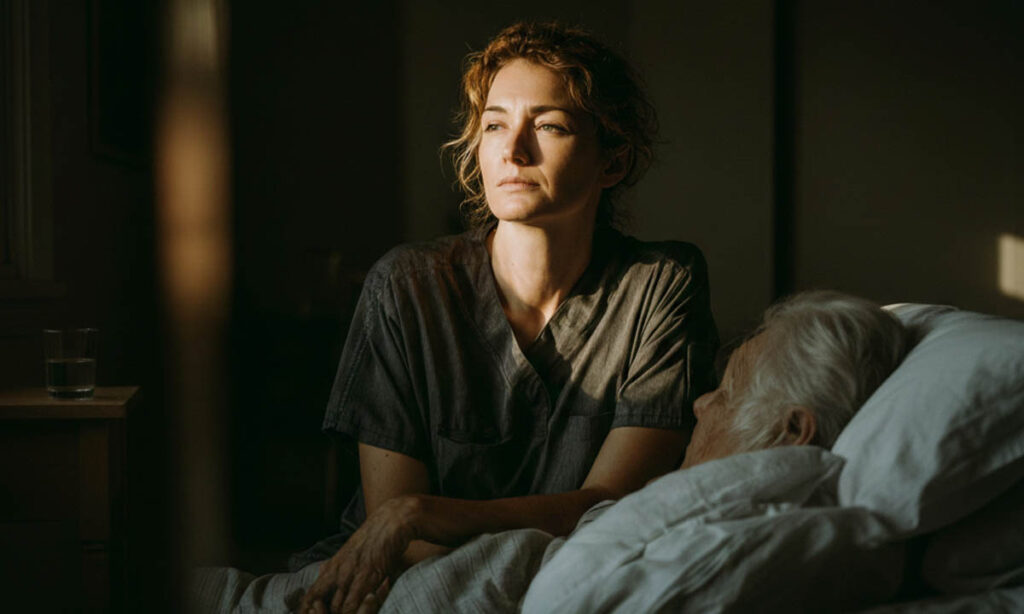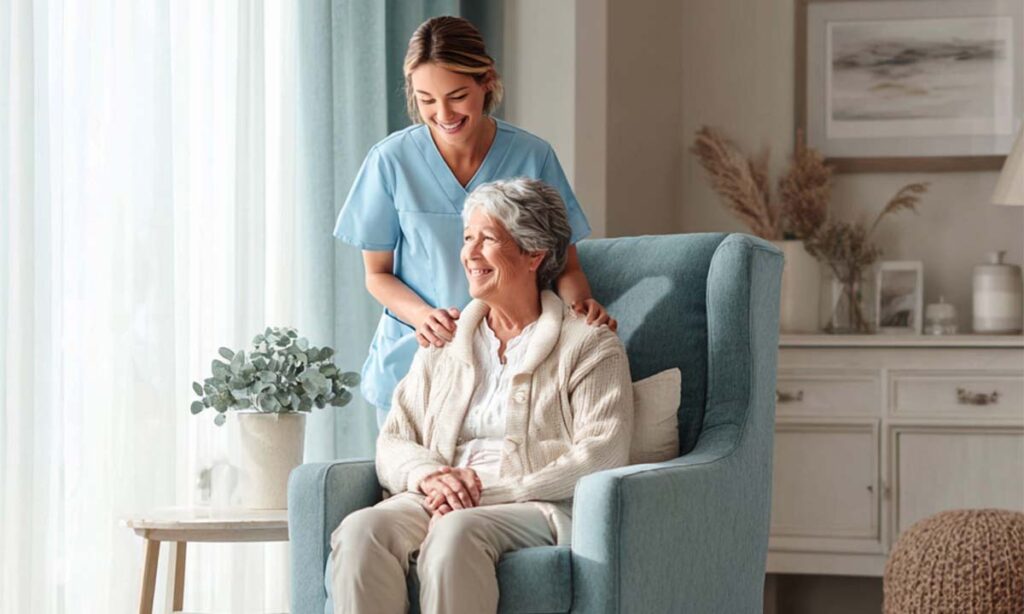
In the home care landscape, we are witnessing a debate reminiscent of the one that divided the world in the 1990s between computer enthusiasts and those nostalgic for typewriters. On the one hand, there are the technologists who see a future world of sensors, algorithms, and artificial intelligence. On the other, there are the humanists who fear the loss of human contact, the warmth of relationships, and the empathy that only a human being can offer.
This dichotomy is not only sterile, but also profoundly wrong. The future of home care is not a choice between technology and humanity, but their intelligent and synergistic integration. It is not a question of replacing human operators with robots, but of empowering them, making them more effective, more informed and, paradoxically, more human.
At CAD Healthcare, this future is not a distant vision, but a daily reality that we live and perfect every day in the homes of Canton Ticino. We have learned that true innovation lies not in technology for its own sake, but in how we integrate it with the experience, expertise, and empathy of our professionals.
The evolution of home care: from reactive to predictive
The traditional model: on-call care
For decades, home care has operated according to a reactive model: intervening when there is a problem, responding when a call comes in, treating when the illness manifests itself. It is a model that has worked, saving lives and alleviating suffering, but it has obvious limitations.
The traditional home care worker arrives at the patient’s home with information gathered during the previous visit, often dating back days or weeks. They have to spend valuable time assessing the current situation, understanding what has changed, and gathering information that may already be available. It’s like driving while only looking in the rearview mirror.
The new paradigm: predictive and personalized care
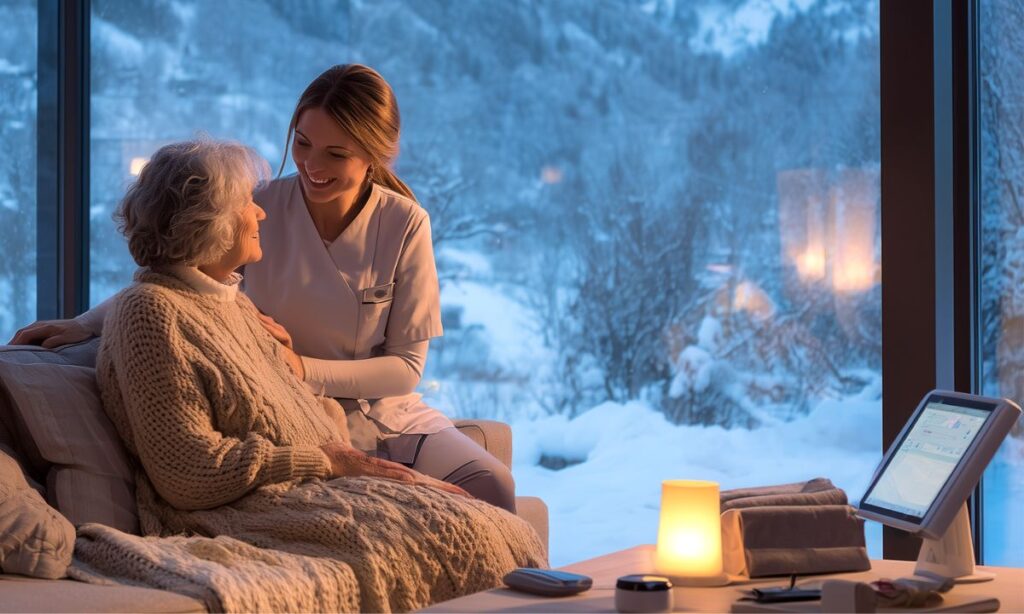
The model we are developing at CAD Healthcare is radically different. Thanks to technology, we can constantly monitor the health and well-being of our patients, collecting objective data 24 hours a day, 7 days a week. But this data is not an end in itself: it is the fuel that powers smarter, more timely, and more personalized care.
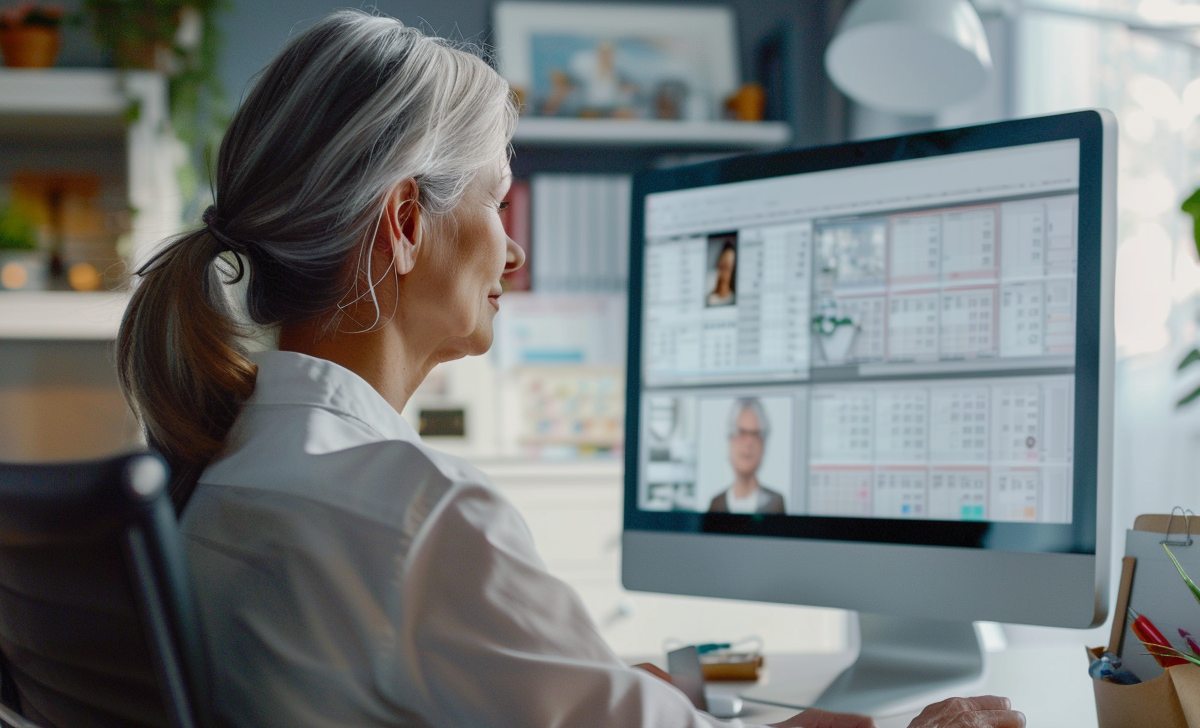
Imagine a nurse arriving at a patient’s home already knowing how they slept the night before, whether they had any episodes of agitation, whether their vital signs are stable, and whether they have taken their medication regularly. This nurse can devote their time not to gathering basic information, but to what really matters: listening, in-depth clinical assessment, health education, and emotional support.
If you are wondering how to choose Spitex, consult the complete guide to everything you need to know about home care in Ticino.
The healthcare professional of the future: the enhanced nursing role of the “case manager”
Beyond basic care: integrated care management
The healthcare worker of the future, which for us at CAD Healthcare is already the present, is no longer just a person who provides physical help or companionship. They are a true “case manager”: a professional who coordinates, manages, and optimizes all aspects of home care.
The profile of the CAD case manager: our case managers are qualified nurses with specific training capable of managing highly complex situations. In addition to technical skills, they possess fundamental human qualities: empathy, listening skills, patience, and that particular sensitivity that allows them to grasp unspoken needs.
The skills of the case manager of the future
The case manager of the future must possess a unique mix of technical, technological, and human skills:
- Advanced clinical skills: critical thinking skills, knowledge of clinical practice in relation to pathologies, skills in pharmacology, and emergency management skills.
- Technological skills: ability to interpret data collected by sensors, use artificial intelligence systems for decision support, and manage complex digital platforms.
- Interpersonal skills: empathy, communication skills, conflict management skills, cultural sensitivity, ability to work in multidisciplinary teams.
- Organizational skills: time management, coordination of multiple interventions, strategic planning, priority management.
Technology as a “silent sentinel”
Continuous monitoring: eyes that never sleep
One of the most revolutionary aspects of modern home care is the possibility of continuous monitoring. No human being, however dedicated and competent, can always be present. Technology, on the other hand, can.
Our monitoring systems act as a “silent sentinel” that constantly watches over our patients, collecting objective data that the human eye could never capture with the same precision and continuity.
Different levels of monitoring
- Environmental monitoring: discreet sensors strategically placed around the home detect movement, temperature, humidity, air quality, and noise. This data allows us to reconstruct daily life patterns and identify significant anomalies.
- Physiological monitoring: wearable devices monitor vital parameters such as heart rate, blood pressure, body temperature, oxygen saturation, and sleep quality. Such as the Healthcare Watch by CAD. Some more advanced devices can also detect biochemical parameters through sweat or saliva analysis.
- Behavioral monitoring: advanced algorithms analyze daily behavior patterns: meal times, time spent in the bathroom, frequency of outings, social interactions. Significant changes in these patterns may indicate physical or mental health problems.
- Cognitive monitoring: cognitive games and tests integrated into smart devices allow cognitive functions to be monitored over time, identifying early signs of decline or improvement.
Artificial intelligence at the service of care
The data collected by the monitoring systems is processed by artificial intelligence algorithms that identify patterns, trends, and anomalies. But AI does not replace human clinical judgment: it supports and enhances it.
- Pattern recognition: AI is particularly effective at identifying complex patterns that may escape human observation. For example, it can detect that a person tends to have episodes of confusion at the same time of day, suggesting a possible side effect of a medication.
- Risk prediction: Predictive algorithms can identify people at risk of falls, infections, heart attacks, or other adverse events, enabling targeted preventive interventions.
- Personalization of care: AI can suggest personalized interventions based on individual data, expressed preferences, and results obtained with similar interventions on other patients with similar characteristics.
- Resource optimization: AI can optimize visit scheduling, suggest the optimal duration of interventions, and identify the best times for specific therapeutic activities.
Case study: fall prevention
Mrs. Anna, 82, lives alone in a two-story house in Mendrisio. She has a history of falls, and her children are concerned about her safety. CAD Healthcare installed a comprehensive monitoring system that includes motion sensors, a wearable device for fall detection, and environmental sensors.
After three months of monitoring, AI identified a worrying pattern: Mrs. Anna tends to move more slowly and with greater instability in the evening hours, especially after 8:00 p.m. Data analysis revealed that this coincides with the intake of a medication that has sedative effects.
Our case manager discussed the situation with the attending physician, who adjusted the medication dosage. The result: a significant reduction in evening instability and no falls in the last six months.
Without continuous monitoring and data analysis, this pattern would never have been identified, and Ms. Anna would have continued to be at risk of serious falls.
Seamless integration creates value in care services
The true value of modern home care lies not in technology alone, nor in isolated human intervention, but in their synergistic integration. When technology and human expertise work together, the result is greater than the sum of its parts.
The advantages of human-tech integration
- Increased efficiency: technology eliminates many routine and data collection tasks, allowing caregivers to focus on high value-added activities.
- Improved accuracy: objective data collected by sensors reduces the risk of assessment errors and enables more informed decisions.
- Continuity of care: continuous monitoring ensures that no significant changes go unnoticed, even between visits.
- Extreme personalization: the combination of objective data and clinical observation allows for a level of personalization of care never before achieved.
- Active prevention: early identification of problems allows for preventive interventions that improve outcomes and reduce costs.
- Peace of mind for families: knowing that there is a double level of control—technological and human—offers priceless peace of mind to family members.
The challenges of integration
Integrating technology and the human factor is not easy. It requires:
- Continuous training: operators must be constantly updated on new technologies and how to use them effectively.
- Cultural change: overcoming resistance to change and embracing a new way of working.
- Significant investment: advanced technology requires significant investment in hardware, software, and training.
- Privacy management: balancing the benefits of monitoring with respect for privacy and individual autonomy.
- Process standardization: creating protocols that effectively integrate technological data and clinical assessment.
The CAD Healthcare model: the integrated ecosystem
Beyond service: a care ecosystem
At CAD Healthcare, we don’t just offer a home care service. We have created a true integrated ecosystem that puts the person at the center and coordinates all the resources necessary to ensure the greatest possible well-being around them. The components are:
- The operations center: the beating heart of the system, active 24/7, staffed by qualified nurses who constantly monitor all patients and coordinate interventions.
- Local case managers: qualified professionals distributed throughout the Ticino region, each responsible for a limited number of patients to ensure a personalized relationship.
- The network of specialists: doctors, physical therapists, psychologists, nutritionists, and social workers who work together in an integrated manner to address all aspects of health and well-being.
- The technology platform: an integrated system of devices, sensors, AI algorithms, and digital platforms that collect, analyze, and share information in real time.
- Family support: training, support, and involvement programs for families, because home care is always a team effort.
Discover all the enabling technologies of CAD
The ecosystem philosophy
Our philosophy is based on a few fundamental principles:
- Person-centeredness: every decision, every intervention, every innovation must be evaluated based on its impact on the well-being of the person being cared for.
- Total integration: all components of the ecosystem must work in synergy, sharing information and coordinating interventions.
- Continuous improvement: the ecosystem must be constantly evolving, incorporating new technologies, new skills, and new scientific evidence.
- Sustainability: the ecosystem must be economically sustainable to ensure its continuity over time.
- Transparency: all activities must be transparent and understandable to those receiving care and their families.
Success stories: when integration makes the difference
Integrated diabetes management
Mr. Martinelli, 75, suffers from type 2 diabetes complicated by peripheral neuropathy. His wife, 73, is his primary caregiver but is finding it increasingly difficult to manage her husband’s complex condition.
The initial situation: Unstable blood glucose control, frequent nocturnal hypoglycemia, foot sores that are slow to heal, high stress for both spouses.
CAD intervention: We installed an integrated monitoring system that includes:
- Smart glucometer with automatic data transmission and threshold parameter settings
- Smart scale to monitor weight
- Device for measuring vital signs
- SafeBed Monitoring to assess positioning and time spent in bed
Results: After six months of integrated care:
- 70% reduction in hypoglycemic episodes
- Significant improvement in glycemic control (HbA1c from 9.2% to 7.1%)
- Complete healing of foot lesions
- Reduced stress for both spouses
- No hospitalizations (compared to three in the previous year)
The key factor: The integration of continuous monitoring, timely interventions by the case manager, personalized education, and family support transformed a critical situation into optimal disease management.
Post-stroke recovery
Mr. Chen, 68, suffered an ischemic stroke with left hemiparesis. After discharge from the hospital, the family was concerned about managing his recovery at home.
The initial situation: Reduced mobility, speech difficulties, risk of post-stroke depression, anxious and unprepared family.
The CAD intervention: We created an integrated home rehabilitation program that includes:
- Motion sensors to monitor progress in mobility
- Coordinated activation of physical and occupational therapists
- Speech rehabilitation app with automatic feedback
- Devices for measuring vital signs
- Psychological support for the patient and family
The results: After one year of care:
- 80% recovery of mobility
- Significant improvement in speech
- No episodes of depression
- Family prepared and actively involved in the care process
- Significantly improved quality of life
The key factor: The combination of rehabilitation technologies, continuous progress monitoring, constant professional support, and family involvement led to a recovery that exceeded initial expectations.
Find out how to best plan post-hospitalization home care
The near future: towards predictive care
Beyond monitoring: intelligent prediction
The next step in the evolution of home care is the transition from monitoring to prediction. It is no longer just a matter of detecting when something goes wrong, but of predicting when it might go wrong and taking preventive action.
Emerging technologies at the service of “intelligent care”
· Predictive artificial intelligence: increasingly sophisticated algorithms that can predict adverse events days or weeks in advance, based on the analysis of thousands of parameters.
- Personalized genomics: DNA analysis to tailor care to individual genetic predispositions.
- Nanotechnologies: microscopic sensors that can monitor biological parameters at the cellular level.
- Virtual and augmented reality: for rehabilitation, health education, and psychological support.
- Assistive robotics: domestic robots that can provide physical assistance and companionship.
Ethical and social challenges
With technological evolution come new challenges:
- Privacy and autonomy: how can we balance the benefits of continuous monitoring with respect for privacy and individual autonomy?
- Equitable access: how can we ensure that advanced technologies are accessible to everyone, not just those who can afford them?
- Technological dependence: how can we prevent people from becoming overly dependent on technology?
- Preserving human skills: how can we ensure that technological evolution does not lead to a loss of fundamental human skills?
Conclusions: the future of home care is already here
The future of home care is not a distant vision, but a reality that we are building every day in the homes of Canton Ticino. It is a future in which technology does not replace human beings, but empowers them. In which artificial intelligence does not eliminate empathy, but makes it more effective. In which continuous monitoring does not invade privacy, but protects safety.
It is a hybrid future, where the best of technology merges with the best of humanity to create something new and better. A future where home care is no longer just a response to problems, but a proactive strategy to prevent them.
At CAD Healthcare, this future is not a dream, but our daily commitment. Every device we install, every algorithm we develop, every professional we train is a step towards more effective, more humane, and more dignified home care.
Because the future of care is not about choosing between technology and humanity. It is about embracing both, intelligently integrated, in the service of what really matters: the well-being of the people we care for and the peace of mind of the families who rely on us.
The future is hybrid. The future is already here. The future is CAD Healthcare.
Request our home care: contact us