CAD blog, home nursing and care in Ticino
Articles and insights on home care in Ticino: how it is organised, what it covers, and how to choose the people who come into your home. Written by the team at CAD, a home care and nursing service authorised by the Canton of Ticino.
How to avoid caregiver burnout
The daily life and challenges of family caregivers Caring for a loved one means taking care of many things at once: health, safety, therapies, and organizing daily life. But it also means, too often, putting yourself second. It is precisely in this fragile balance...

Home nursing care: private nurse or caregiver?
How to choose the right nursing care for an elderly parent? “I'm looking for someone trustworthy for my mother.” This is the phrase we hear most often when families in Ticino come to us for the first time. It's a phrase that encapsulates all the love, concern, and...
The future of home care in Ticino: integration between technology and human contact
In the home care landscape, we are witnessing a debate reminiscent of the one that divided the world in the 1990s between computer enthusiasts and those nostalgic for typewriters. On the one hand, there are the technologists who see a future world of sensors,...

5 tips for home care in Ticino during the cold season
Preparing for winter safely in your own home Winter in Ticino is a season of contrasts. On the one hand, there is the charm of snow-capped mountains, breathtaking landscapes, and the cozy atmosphere of shorter days. On the other hand, there are the real challenges...

Healthcare Family Office in Ticino: the new model for Family Health Management
From Family Office to Healthcare Family Office: An Innovative Model for Health Health management, now more than ever, requires a structured and multidimensional approach. The growing complexity of diagnostic and therapeutic pathways, combined with the fragmentation of...

How to prevent readmission after discharge from the hospital? The challenge of the first 30 days
Post-hospital discharge: why is the first month after discharge the most critical? Discover home healthcare protocols to reduce readmissions Leaving the hospital is always a delicate moment. When the hospital door closes behind a discharged patient, it marks the...

How to choose a Spitex? A comprehensive guide to everything you need to know about home care in Ticino.
Essential questions to ask and criteria for finding the right Spitex for you and your family “I don't know where to start, there are so many different services and I don't understand the differences.” This is one of the phrases we hear most often when families in...

“I can’t take this anymore”: when home care doesn’t meet your expectations
How CAD Healthcare solves the most common problems that lead families in Ticino to change their home care service Critical areas of home care in Ticino "Every day a different person comes, they don't even know who I am or what I need. I feel like a number, not a...

Cognitive decline: how to improve quality of life at home
What is cognitive decline? Cognitive decline refers to a decrease in mental abilities such as memory, reasoning, and language, which can be part of normal aging or indicate more serious conditions such as dementia. Let's start with its meaning to better understand the...

Night assistance for elderly and frail people in Ticino
The need for night assistance The night can be a particularly critical time, causing great concern for elderly people or seriously ill patients receiving home care. To offer them greater peace of mind and security, it is essential to ensure adequate night-time...

Planning post-hospital home care
The moment of discharge from hospital: preparing for care and rehabilitation at home Leaving the hospital after surgery or hospitalization for an acute illness is a delicate moment. Patients and their families often feel a little lost: in the hospital, there was...
Home palliative care: wishes, dignity, and advance directives
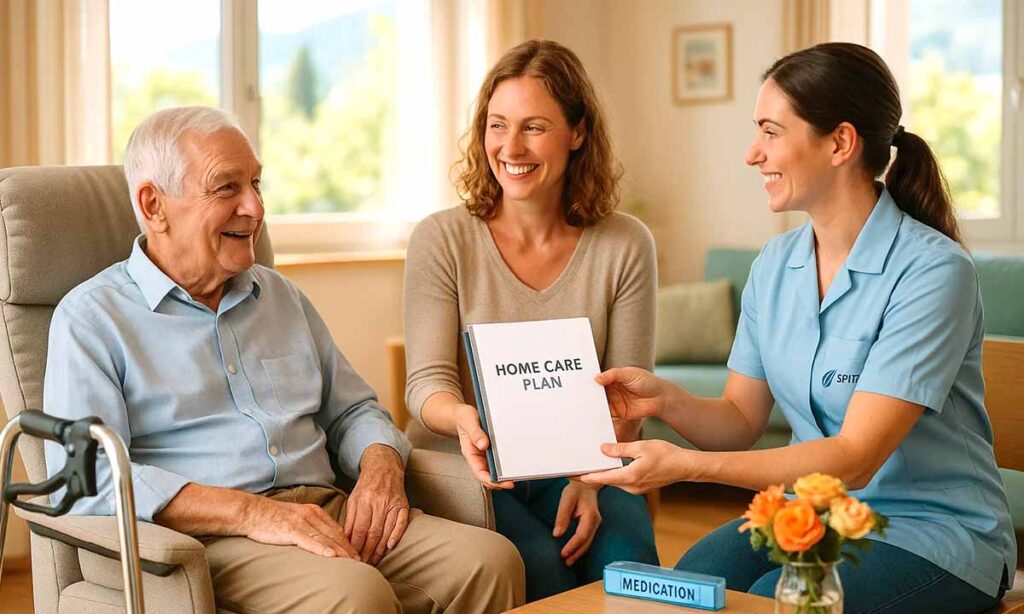
Home palliative care: focusing on the person Definition and objectives of home palliative care Palliative care aims to alleviate the suffering of people with incurable diseases in the advanced stages, also offering the best possible quality of life until the end....

Advanced home care: complex cases and emergencies
What does “advanced home care” mean? It means bringing hospital-based care and expertise into the home to assist patients with complex needs. A “complex case” is, for example, a patient with multiple conditions (multimorbidity) and high clinical instability, requiring...

The Advantages of Home Care over Hospitalization
Home Care vs. Hospitalization: When to Choose Home Care? The Family Environment as a Tool for Therapy and Preventing Hospitalization Receiving healthcare at home, when possible, offers numerous benefits compared to traditional hospitalization. The patient remains in...

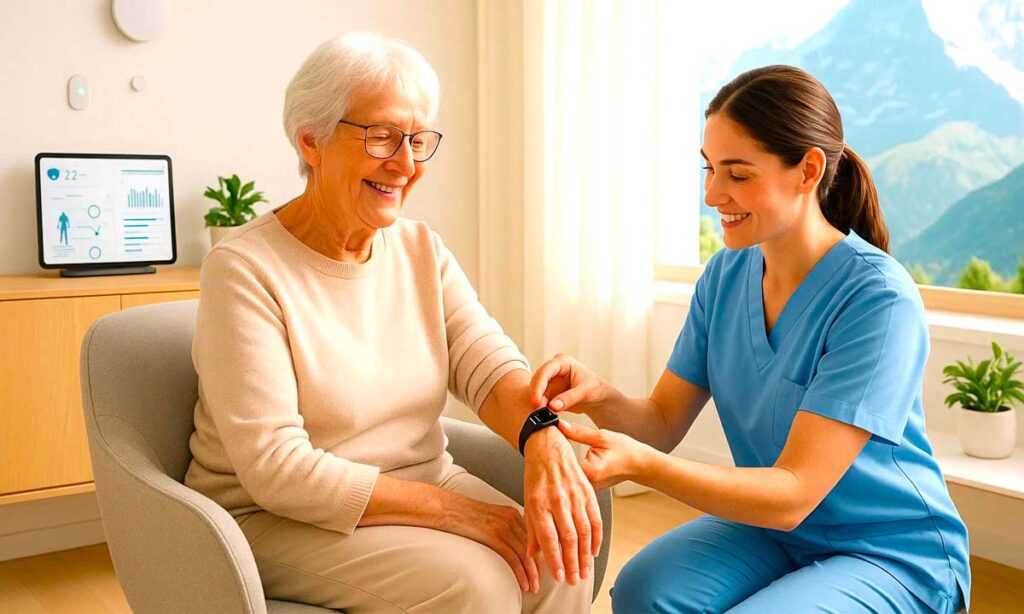
Advanced Tele-assistance Service in Switzerland: continuous telemonitoring
What is Tele-assistance? Tele-assistance is a vital assistance service that offers safety and security to elderly and vulnerable people living alone. It is a technological solution that allows users to call for help in an emergency with a simple gesture, thanks to a...